Golf GTI Engine Evolution: From Mk1 to Mk8—What Changed (and What Didn’t)
Home of Engines & Gearboxes · 5 September 2025 · 8 min read
The golf gti engine has been a touchstone for hot-hatch performance since the 1970s, and understanding how those engines evolved helps South African buyers, mechanics and fleet owners make smarter choices when sourcing low-mileage or second-hand engines.
What defines the Golf GTI engine across generations?
The defining characteristic of a Golf GTI engine is a blend of compact dimensions, a performance-oriented calibration, and—since the 1980s—forced induction or high-rev naturally aspirated designs that deliver spirited torque and power for a light chassis. For decades the ethos has been: a punchy, driver-focused petrol engine mated to a nimble gearbox. According to Wikipedia, the Golf GTI was first introduced in 1976 as a sporty variant of the mainstream Golf platform, establishing the formula that successive generations refined.
For South African buyers, this baseline matters because a Golf GTI engine's physical footprint, ECU calibration, and ancillaries (turbo, alternator, sensors) determine compatibility with local vehicles and installations. RMI-approved suppliers and specialist importers typically provide complete crate engines with alternator/turbo/pumps included to simplify fitment and reduce installation surprises.
How did the Mk1 to Mk3 Golf GTI engines differ?
The early Mk1 GTI used a high-revving 1.6 and later 1.8 naturally aspirated engines that prioritized light weight and throttle response. By the time Mk2 arrived, displacement and refinement increased; fuel injection and electronic ignition improved drivability. Mk3 introduced multi-valve heads and, in many markets, the move toward more emissions control hardware.
Key technical shifts between Mk1–Mk3:
Intake and ignition: carburetor to electronic fuel injection and distributorless ignition.
Valvetrain: from 8-valve to 16-valve layouts for better breathing.
Ancillaries: alternators, power steering pumps and coolant routing became more complex—important when sourcing a second-hand engine that needs these components.
How did the Mk4 to Mk6 generations change engine architecture?
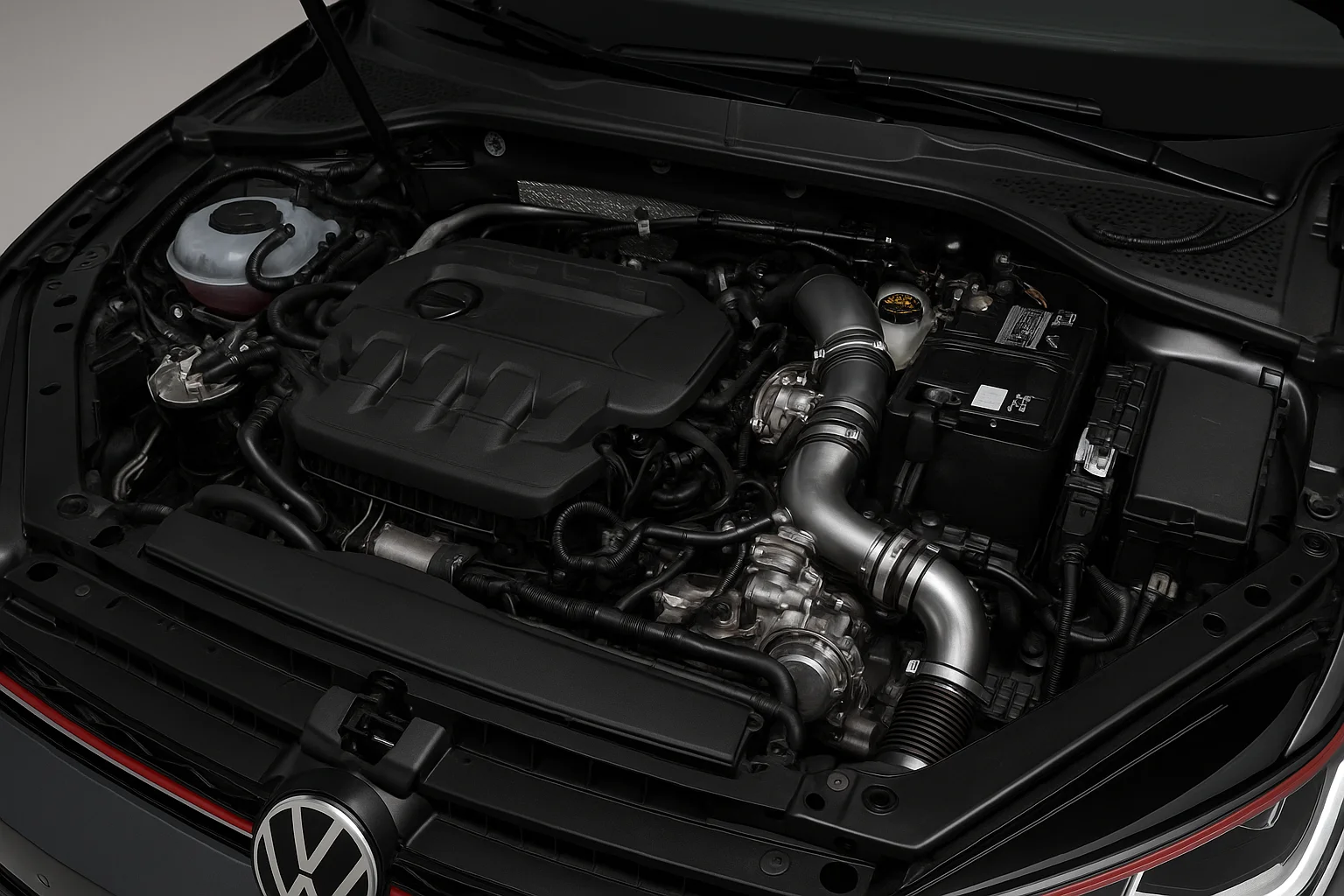
From Mk4 onward the Golf GTI ecosystem embraced turbocharging and downsizing in earnest. The move to robust 1.8T and then 2.0T engines brought higher torque figures at lower rpm and improved packaging for front-wheel-drive layouts. Mechanical robustness improved, while electronics gradually took over functions once handled mechanically.
For mechanics and fleet owners in South Africa, this era marks an easier path to finding high-torque petrol units that pair well with both manual and DSG automatic gearboxes. Many used-engine suppliers offer complete units with turbos and intercoolers included to ensure immediate fitment.
[caption id="" align="alignnone" width="1536"] Golf GTI Engine[/caption]
Why did turbocharging become standard, and what did it change?
Turbocharging delivered higher torque numbers from smaller displacements, reduced engine weight and improved fuel efficiency for similar performance. The shift also required stronger engine internals, more sophisticated cooling and oil systems, and a much greater reliance on the engine management system.
According to Volkswagen, the late-generation 2.0 TSI engines produced by the company offered a substantial torque increase over earlier naturally aspirated units, enabling quicker acceleration without a large fuel penalty. This means when sourcing a used golf gti engine you need to confirm turbo condition, boost control components and actuator health in addition to routine checks like compression and oil condition.
How did emissions control and fuel systems evolve through the Golf GTI engine line-up?
Emissions systems moved from simple catalytic converters and basic EGRs to complex secondary air injection, lambda-controlled multiple catalytic stages, particulate filters (on some modern direct-injection units), and advanced engine-management strategies. Fuel systems moved from port injection to direct injection (GDI) in some generations, improving efficiency but adding sensitivity to fuel quality and maintenance practices.
For the South African market this evolution means:
Direct-injection units may be prone to carbon build-up on intake valves and can demand high-quality fuel and maintenance.
Turbocharged engines require attention to oil quality and change intervals to protect turbo bearings.
When importing a used engine, ensure emission-related ancillaries accompany the crate engine to meet local registration and compliance checks.
Golf GTI engine: Can Mk7 and Mk8 parts be swapped?
Short answer: sometimes, but often with caveats. The golf gti engine families from Mk7 and Mk8 share a lineage—both typically use 2.0 TSI architectures—but Mk8 introduced newer electronics, revised mounting points, and updated turbochargers and particulate management. That means physical swaps may be possible between specific model years, but ECU compatibility, immobiliser coding and gearbox mateability can complicate direct swaps.
If you plan to interchange parts or transplant a complete engine, verify:
Check
Why it matters
ECU and immobiliser
Modern engines are coded; mismatches can disable the vehicle.
Mounting and ancillaries
Oil lines, turbo inlet routing and alternator positions can differ.
Gearbox interface
Flywheel/hub and clutch compatibility or software for DSG
Mechanics in South Africa often prefer sourcing complete low-mileage crate engines with compatible ancillaries to avoid these headaches; look for suppliers who provide expert support for engine compatibility checks.
How do I source a used Golf GTI engine in South Africa?
Sourcing can be done locally or via import. Local second-hand markets may offer engines salvaged from write-offs; imports often supply low-mileage units from Europe or Japan with better documentation. For Johannesburg buyers, specialist importers advertise engines and provide nationwide delivery and fitting options.
Practical sourcing checklist:
Request full documentation including mileage history and photos of the donor car.
Ask whether the engine is sold as a complete unit with turbo/alternator/pumps to simplify installation.
Prefer RMI-approved suppliers or vendors that offer at least a short warranty.
For Johannesburg customers, there are listings specific to the region that include import compliance and stock details; see examples of imported-engine listings to compare offers and delivery options. If you want a local supplier hub, check reputable brand inventories and the company services page for installation options and nationwide delivery.
What should mechanics check when installing a second-hand engine?
Install checks go well beyond bolt-up. Mechanics should perform a compression or leak-down test, inspect timing components (tensioners and belts/chains), verify turbo health and shaft play, and confirm the integrity of coolant and oil passages. Electrical harnesses should be checked for corrosion and correct pin-outs; mismatched sensors can trigger limp mode.
Installation checklist:
Compression/leak-down test and oil sample analysis.
Timing system overhaul if unknown history.
Replace wear items (water pump, belts, tensioners) and gaskets.
Test-run on a stand or in-vehicle with diagnostic monitoring for codes and live data.
Using a supplier that offers expert support for engine compatibility reduces installation time and risk. Many shops in South Africa pair sourcing from a trusted supplier with their own installation services.
How do warranties, import compliance and delivery work for imported engines?
When you import a golf gti engine, compliance with local registration, duty, and environmental regulations is crucial. Many reputable suppliers provide engines with paperwork to assist with registration and include nationwide delivery. Warranty terms vary—common offers are 1–3 months on used units when sold by trusted suppliers.
According to the Retail Motor Industry (RMI) in South Africa, dealing with certified suppliers with clear warranty terms and documented mileage reduces post-sale disputes and registration headaches. Suppliers that are RMI-approved typically advertise their accreditation and provide support for compliance checks.
Before purchase, confirm:
What is covered by the warranty (core exchange, labour, parts)?
Does the supplier include ancillaries like alternator and turbo?
Is there a return or core-exchange policy?
For regional buyers looking at Johannesburg imports, see dedicated import listings that detail delivery to Johannesburg and nationwide service options.
How do gearboxes pair with Golf GTI engines—manual vs automatic concerns?
Gearbox compatibility is often as important as the engine itself. The Golf GTI has traditionally been paired with short-throw manuals or high-torque DSG/automatic units. When sourcing an engine, ensure the flywheel, clutch, bellhousing and gearbox input shaft match the donor transmission or that a compatible gearbox is part of the sale.
Key considerations:
Clutch and flywheel compatibility for manual swaps; ensure correct spline counts and starter ring positions.
DSG units require matching mechatronics and software adaptions; swapping mechanical parts alone is rarely enough.
Some suppliers sell matched engine-and-gearbox packages to simplify installation and warranty claims.
For fleet owners and mechanics who need gearbox replacement together with an engine, packaged deals from engine suppliers can save time. Many vendors also offer gearbox-only services and r
What are the cost drivers and buying tips for South African customers?
Pricing varies by generation, mileage, completeness (whether ancillaries are included), and warranty. The main cost drivers are: age and mileage, whether the turbo and ancillaries are included, freight/import taxes, and whether the unit requires additional coding or parts to mate with the vehicle.
Tips for buyers in South Africa:
Prioritise engines sold as complete units with alternator, turbo and sensor harnesses included to avoid extra parts costs.
Accept that direct part swaps between generations may require ECU coding or immobiliser attention—budget for diagnostic labour.
Use RMI-approved or reputable vendors who provide some warranty and nationwide delivery to reduce logistical risk.
According to Volkswagen's published specs, modern GTI engines (Mk7/Mk8 era) provide substantially more torque and power than the Mk1 units while being more fuel-efficient, which explains their higher used value and desirability among buyers seeking both performance and economy.
Where can I get help or services for engine replacement in South Africa?
If you need professional services, many suppliers provide national support networks that include engine installation, gearbox replacement and post-fit diagnostics. For instance, consider checking the services page of trusted vendors for nationwide delivery and installation options, or browse brand-specific second-hand engine inventories if you want a particular donor type.
Useful internal resources for South African buyers and mechanics include supplier homepages, brand engine lists and specialized import listings where you can compare costs, warranty terms and stock availability:
Final note: whether you want a classic Mk1 nostalgia rebuild or a low-mileage Mk8 transplant, understanding the golf gti engine’s generation-specific electronics, turbo hardware and gearbox requirements is the difference between a smooth replacement and repeated workshop visits. Use RMI-approved suppliers and request clear warranty and compatibility support to protect your investment.

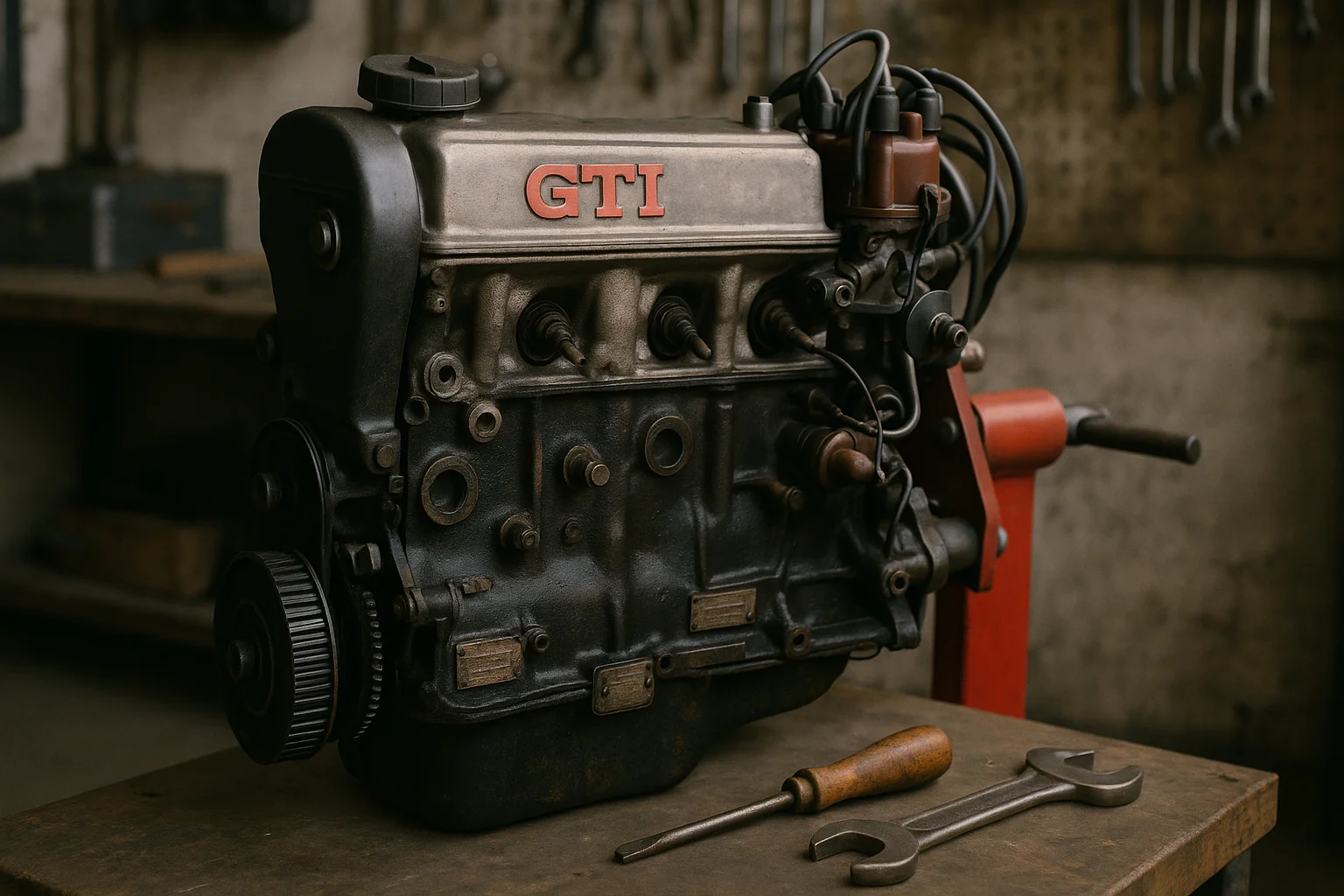 Golf GTI Engine[/caption]