
BMW E39 Engines in South Africa: How to Match the Correct Replacement Engine
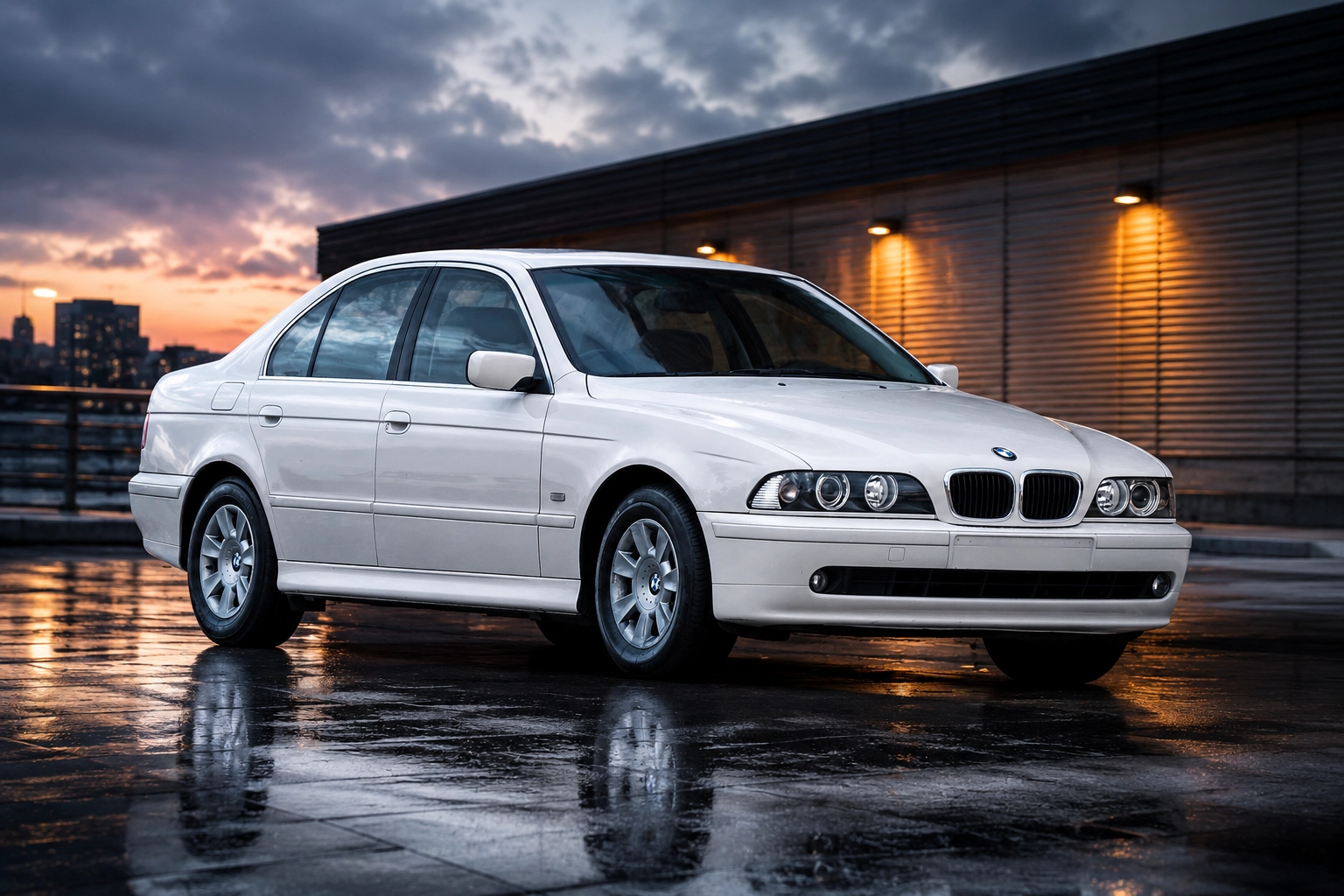
The BMW E39 remains one of the most respected generations of the BMW 5 Series, but age, high mileage and previous overheating can eventually lead to expensive engine problems. For South African owners, the most important step is identifying the exact BMW E39 engine code before deciding whether to repair, rebuild or install a replacement engine.
This guide explains the BMW E39 engine range, common warning signs, known petrol and diesel engine problems, compatibility checks and replacement options available in South Africa. It is intended for private owners, mechanics, workshops and buyers searching for a reliable BMW E39 engine for sale.
What is the BMW E39 and why is it still popular in South Africa?
The BMW E39 is the fourth-generation BMW 5 Series, produced from the mid-1990s until the early 2000s. According to BMW Group Classic, almost 1.5 million vehicles from this model series were sold, making it one of BMW’s most successful executive-car generations.
In South Africa, the BMW E39 remains popular because it combines comfortable long-distance driving, rear-wheel-drive handling, strong six-cylinder engines and relatively good availability of used mechanical parts. Well-maintained examples are still used as daily vehicles, enthusiast cars and workshop projects throughout Gauteng, KwaZulu-Natal, Mpumalanga and the rest of the country.
The challenge is that the term BMW E39 covers several different petrol and diesel models. A replacement engine for a 520i will not automatically fit a 528i, 530i, 530d or 540i. Even engines from the same family may use different sensors, wiring, intake systems, engine-management software or ancillary components.
Which engines were fitted to the BMW E39?
The BMW E39 was available with four-cylinder diesel, straight-six petrol, straight-six diesel and V8 petrol engines. The exact engine depended on the model, production year, facelift status and market in which the vehicle was originally sold.
Common BMW E39 engine families include:
- M52 and M52TU: Straight-six petrol engines commonly used in the 520i, 523i and 528i.
- M54: Later straight-six petrol engine used in facelift models such as the 520i, 525i and 530i.
- M51: Earlier six-cylinder turbodiesel engine found in models such as the 525td and 525tds.
- M47: Four-cylinder turbodiesel engine used in the 520d.
- M57: Six-cylinder turbodiesel engine used in the 525d and 530d.
- M62 and M62TU: V8 petrol engines used in the 535i and 540i.
- S62: High-performance V8 engine fitted to the BMW E39 M5.
Table: Common BMW E39 models and engine families
| BMW E39 model | Common engine family | Practical compatibility note |
|---|---|---|
| 520i | M52, M52TU or M54 | Confirm production year, displacement and single or double VANOS specification |
| 523i | M52 or M52TU | Check wiring, intake system, sensors and ECU compatibility |
| 525i | M54B25 | Commonly a facelift model; confirm complete engine code before purchase |
| 528i | M52B28 or M52TUB28 | Single-VANOS and double-VANOS versions are not identical |
| 530i | M54B30 | Confirm sump, accessories, wiring and transmission application |
| 520d | M47 | Check turbo, injectors, fuel system and gearbox compatibility |
| 525d | M57D25 | Confirm facelift status and diesel engine-management components |
| 530d | M57D30 | Check engine version, turbo, injectors, wiring and transmission type |
| 535i or 540i | M62 or M62TU | Confirm displacement, VANOS specification, wiring and automatic or manual gearbox |
| E39 M5 | S62B50 | Specialised high-performance engine requiring exact matching and expert installation |
The model badge alone is not enough to order an engine. The engine code, VIN, production date and existing engine configuration should all be checked before payment.
What are the most common BMW E39 engine problems?
The most common BMW E39 engine problems involve cooling-system deterioration, oil leaks, worn VANOS components, crankcase ventilation faults and age-related failure of plastic or rubber parts. The exact risks vary considerably between the straight-six petrol, diesel and V8 engines.
Because every BMW E39 is now an older vehicle, service history is often more important than mileage alone. A properly maintained higher-mileage engine can be a safer purchase than a neglected low-mileage unit that has overheated or been run with insufficient oil.
What cooling-system problems affect BMW E39 engines?
Cooling-system failure is one of the most serious risks on an ageing BMW E39 because overheating can damage the cylinder head, head gasket, block and internal engine components. Expansion tanks, radiator connections, water pumps, thermostats, hoses and fan components can all deteriorate with age.
Warning signs of an E39 cooling-system problem include:
- The temperature gauge rising above its normal position.
- Repeated coolant warnings or unexplained coolant loss.
- Coolant stains around the expansion tank, radiator or hose connections.
- A sweet smell from the engine bay or inside the vehicle.
- Steam, bubbling coolant or excessive pressure in the cooling system.
- White exhaust smoke after the engine has reached operating temperature.
- Oil contamination in the coolant or coolant contamination in the oil.
An E39 that has overheated should be professionally inspected before more parts are fitted. Replacing a radiator or expansion tank will not solve the problem if the cylinder head has warped or the head gasket has already failed.
What problems occur on M52 and M54 BMW E39 petrol engines?
M52 and M54 straight-six engines are known for smooth power delivery, but older units can develop oil leaks, crankcase ventilation problems, VANOS wear, cooling-system failures and intake-system faults.
Common areas to inspect include:
- Valve-cover gasket and oil-filter-housing gasket leaks.
- Crankcase ventilation system failure and excessive oil consumption.
- VANOS seal wear causing weak low-speed response or uneven power delivery.
- Vacuum leaks from ageing intake boots and hoses.
- DISA valve wear on applicable M54 engines.
- Ignition-coil, spark-plug or sensor faults causing misfires.
- Cooling-system failure leading to cylinder-head or head-gasket damage.
The M54B30 used in the BMW 530i is one of the best-known E39 petrol engines. BMW Group Classic lists the E39 530i as a 3.0-litre straight-six producing 170 kW, but the condition of a used unit remains more important than its original performance figures. Buyers can read more about this engine family in the Home of Engines M54 engine guide.
What problems affect BMW E39 diesel engines?
BMW E39 diesel problems commonly involve the fuel-injection system, turbocharger, vacuum system, cooling system and age-related oil or boost leaks. Diagnosis should be completed before replacing the complete engine because a failed injector, turbo or sensor can create symptoms that appear similar to internal engine damage.
Important diesel warning signs include:
- Difficult starting when cold or hot.
- Uneven idling or excessive diesel knock.
- Black smoke under normal acceleration.
- Blue smoke caused by oil entering the combustion system.
- Loss of turbo boost or an emergency reduced-power mode.
- Fuel leaks or strong diesel smells around the engine.
- Metallic turbo noise, excessive shaft wear or oil inside boost pipes.
- Cooling-system pressure or evidence of previous overheating.
The six-cylinder M57 is especially sought after because of its torque and engine-swap potential. However, a replacement M57 must still be matched according to capacity, generation, fuel system, turbo specification, wiring and transmission application. More information is available in the M57 engine guide.
What problems affect the BMW E39 535i and 540i V8 engines?
The BMW E39 535i and 540i use M62-family V8 engines. These engines provide strong performance, but repairs can become expensive when cooling-system neglect, oil leaks or timing-chain-guide wear are ignored.
Areas requiring careful inspection include:
- Timing-chain guides, tensioners and related timing components.
- VANOS operation on applicable M62TU engines.
- Valve-cover, upper timing-cover and other engine-oil leaks.
- Valley-pan and cooling-system leaks.
- Intake leaks, sensors and throttle-control components.
- Previous overheating or low-oil-pressure damage.
A rattling sound from the front of an M62 engine, especially during startup, should not be ignored. It does not automatically confirm timing-chain-guide failure, but the engine should be inspected before continued driving causes more serious internal damage.
What warning signs indicate that a BMW E39 engine may be failing?
A failing BMW E39 engine may display persistent overheating, heavy smoke, low oil pressure, internal knocking, poor compression, coolant contamination or severe power loss. These symptoms should be diagnosed promptly because continued driving can turn a repairable fault into complete engine failure.
Major warning signs include:
- Repeated overheating: This may indicate a cooling-system fault, damaged head gasket, warped cylinder head or cracked component.
- Blue exhaust smoke: The engine may be burning oil through worn rings, valve seals, crankcase ventilation components or a damaged turbocharger.
- Persistent white smoke: Once condensation has cleared, continued white smoke may indicate coolant entering the combustion chambers.
- Deep knocking noises: Internal bearing, connecting-rod or crankshaft damage may be present.
- Low oil-pressure warning: Stop the engine and investigate immediately to prevent bearing or crankshaft damage.
- Severe misfiring: Compression loss, valve damage, ignition faults or fuel-system problems may be responsible.
- Oil and coolant mixing: Milky oil or oily coolant requires immediate professional diagnosis.
- Metal in the engine oil: Metallic debris can indicate significant internal wear or component failure.
A diagnostic scan is useful, but electronic fault codes cannot confirm the mechanical condition of the block, cylinder head, pistons, bearings or compression system. A proper inspection may also require compression testing, cylinder-leakage testing, cooling-system pressure testing and oil-pressure measurement.
Should you repair, rebuild or replace a BMW E39 engine?
The correct decision depends on the extent of the damage, availability of parts, labour cost, engine code and overall condition of the vehicle. Minor external leaks and failed ancillary components normally justify repair, while severe overheating, low compression, block damage or bearing failure can make replacement more practical.
Repair may be suitable when:
- The problem is limited to gaskets, hoses, sensors or cooling-system parts.
- The engine still has healthy compression and oil pressure.
- The block and cylinder head have not suffered serious damage.
- The repair can be completed without extensive internal machining.
A rebuild may be suitable when:
- The original engine number and matching drivetrain are important to the owner.
- The block, crankshaft and cylinder head are suitable for machining.
- A reputable BMW engine specialist can complete the work.
- The required internal parts remain available at a sensible cost.
Engine replacement may be the better option when:
- The engine has seized or suffered major internal bearing damage.
- The block or cylinder head is cracked beyond economical repair.
- The engine has repeatedly overheated and compression is poor.
- The total rebuild quotation approaches or exceeds the installed cost of a suitable replacement unit.
- Vehicle downtime needs to be reduced.
What replacement options are available for a BMW E39 in South Africa?
South African BMW E39 owners can consider a second-hand local engine, imported used engine, professionally rebuilt engine or remanufactured unit. Each option has a different cost, warranty level and installation risk.
| Replacement option | Main advantage | Main consideration |
|---|---|---|
| Local second-hand engine | Potentially affordable and quickly available | Service history and previous overheating may be unknown |
| Imported used engine | Access to additional engine codes and lower-mileage units | Compatibility, documentation and included components must be confirmed |
| Rebuilt original engine | Retains the existing engine configuration | Final quality depends heavily on machining, parts and workmanship |
| Remanufactured engine | Major internal components are restored or replaced | Usually more expensive and may be difficult to source for older variants |
| Complete engine with ancillaries | Can reduce missing-part and fitment complications | Confirm exactly which accessories are included and covered by warranty |
Home of Engines supplies imported engines and gearboxes through branches in Pretoria, Ballito and Secunda, with delivery available to customers throughout South Africa. Available BMW stock can be viewed through the BMW engines for sale category.
How do you confirm BMW E39 engine compatibility before buying?
The safest way to confirm compatibility is to match the complete engine code and vehicle details rather than relying only on the BMW model badge. A 525i, 525d and 525tds may share similar model numbers but use completely different engines and fuel systems.
Provide the supplier with:
- The complete vehicle identification number or VIN.
- The existing engine number and engine-family code.
- The vehicle’s production year and production month where available.
- The exact model, such as 528i, 530i, 525d or 530d.
- Whether the vehicle is pre-facelift or facelift.
- Whether it uses a manual or automatic gearbox.
- Photographs of the existing engine, intake, wiring plugs and identification markings.
Compatibility checks should also cover the sump, engine mounts, exhaust manifolds, intake components, wiring harness, sensors, ECU or DME, immobiliser system, flywheel or flexplate and gearbox bellhousing.
Some replacement units can use components transferred from the original engine, but this should be planned before installation. Assuming that every M54, M57 or M62 is identical can lead to extra labour, coding problems and unexpected parts costs.
What should be checked when buying a used BMW E39 engine?
A used BMW E39 engine should be inspected for physical damage, oil contamination, coolant residue, excessive sludge, broken mounting points and signs of previous overheating. The buyer must also understand what is included in the sale and what the warranty requires.
Use this practical buying checklist:
- Confirm the exact engine code and donor-vehicle application.
- Ask whether the engine was tested before removal.
- Request available mileage or donor-vehicle information.
- Check for cracks, damaged mounting points and broken connectors.
- Inspect the oil cap and cooling passages for contamination.
- Ask whether the alternator, starter, turbo, injectors, pumps, manifolds and sensors are included.
- Confirm whether ancillary components are included only for convenience or are also covered by the warranty.
- Request the written warranty terms before installation begins.
- Keep the invoice, engine-number information and import documentation.
- Use an experienced workshop familiar with BMW cooling, wiring and engine-management systems.
Home of Engines states that its imported units are sourced from England and are supplied with a three-month warranty. Buyers should still read the specific warranty conditions because incorrect installation, overheating, oil starvation or failure to replace required service components may affect a claim.
What parts should be replaced during a BMW E39 engine installation?
Replacing accessible service items during installation can reduce the risk of removing the engine again shortly afterwards. The exact parts depend on the engine, but old cooling, sealing and service components should not automatically be transferred to the replacement unit.
Ask the installer to assess:
- Engine oil and the correct oil filter.
- Coolant and the complete cooling-system condition.
- Thermostat, water pump, expansion tank and damaged hoses.
- Drive belts, pulleys and tensioners.
- Accessible oil seals and leaking gaskets.
- Spark plugs and ignition components on petrol engines.
- Fuel filters, injector seals and vacuum hoses on diesel engines.
- Engine and gearbox mounts.
- Clutch components on manual vehicles.
- Torque converter, flexplate and transmission-fluid condition on automatic vehicles.
The replacement engine should be rotated and inspected before startup, filled with the correct fluids and primed where required. After installation, the workshop should verify oil pressure, cooling-system bleeding, operating temperature, fault codes and fluid leaks before the vehicle is returned to normal use.
Can Home of Engines help source a BMW E39 engine?
Home of Engines can assist South African buyers searching for BMW petrol engines, diesel engines and compatible gearboxes. Stock changes regularly, so the best approach is to submit the E39 model, VIN, production year, engine code and transmission details when requesting a quotation.
Useful Home of Engines pages include:
- BMW engines for sale in South Africa
- BMW engines and gearboxes
- BMW E39 525d facelift engine
- Imported engines for sale in Johannesburg
- Engine, gearbox and replacement services
- Contact Home of Engines
Customers can arrange collection or discuss nationwide delivery to Johannesburg, Pretoria, Cape Town, Durban, Bloemfontein, Polokwane, Mbombela, Gqeberha and other areas across South Africa.
Frequently asked questions about BMW E39 engines
Is every BMW E39 engine interchangeable?
No. BMW E39 engines differ according to model, production date, displacement, fuel type, facelift status, VANOS specification, wiring, ECU and gearbox. The complete engine code and VIN should be checked before purchase.
What is the most common cause of serious BMW E39 engine damage?
Overheating is one of the most serious causes because it can damage the head gasket, cylinder head, block and internal components. Low oil pressure and oil starvation can also cause rapid bearing and crankshaft damage.
Is an M54 engine a direct replacement for an M52 engine?
Not automatically. Although both are BMW straight-six petrol engine families, differences in wiring, sensors, intake systems, engine management, immobiliser systems and ancillary components can prevent a straightforward replacement.
Can I replace a BMW E39 petrol engine with a diesel engine?
A petrol-to-diesel conversion is significantly more complicated than replacing an engine with the correct original type. It can require changes to the fuel system, wiring, ECU, gearbox, cooling system, exhaust, differential and vehicle documentation. In most cases, sourcing the correct original engine is more practical.
Does a used BMW E39 engine come with a warranty?
Warranty terms depend on the supplier. Home of Engines advertises a three-month warranty on its imported engines and gearboxes, subject to its terms and installation requirements. Always obtain the warranty conditions in writing before fitting the engine.
Can a BMW E39 replacement engine be delivered outside Gauteng?
Yes. Home of Engines offers nationwide delivery, allowing customers and workshops outside Pretoria and Johannesburg to request engines and gearboxes for delivery elsewhere in South Africa.
Final advice before buying a BMW E39 replacement engine
A BMW E39 can remain a reliable and enjoyable vehicle when the correct engine is installed and the cooling, lubrication and engine-management systems are properly maintained. The most expensive mistakes usually happen when buyers order according to the model badge alone, ignore signs of previous overheating or begin installation without confirming wiring and gearbox compatibility.
Before buying, record the VIN, engine code, production year and transmission type. Ask what components are included, obtain the warranty terms in writing and use a workshop familiar with BMW engine installation and cooling-system bleeding.
For help finding a BMW E39 engine for sale in South Africa, contact Home of Engines with your vehicle and engine details. The team can check available BMW stock, discuss compatibility and arrange collection or nationwide delivery.