
Dodge Caliber Engines in South Africa: Which Replacement Engine Fits Your Model?
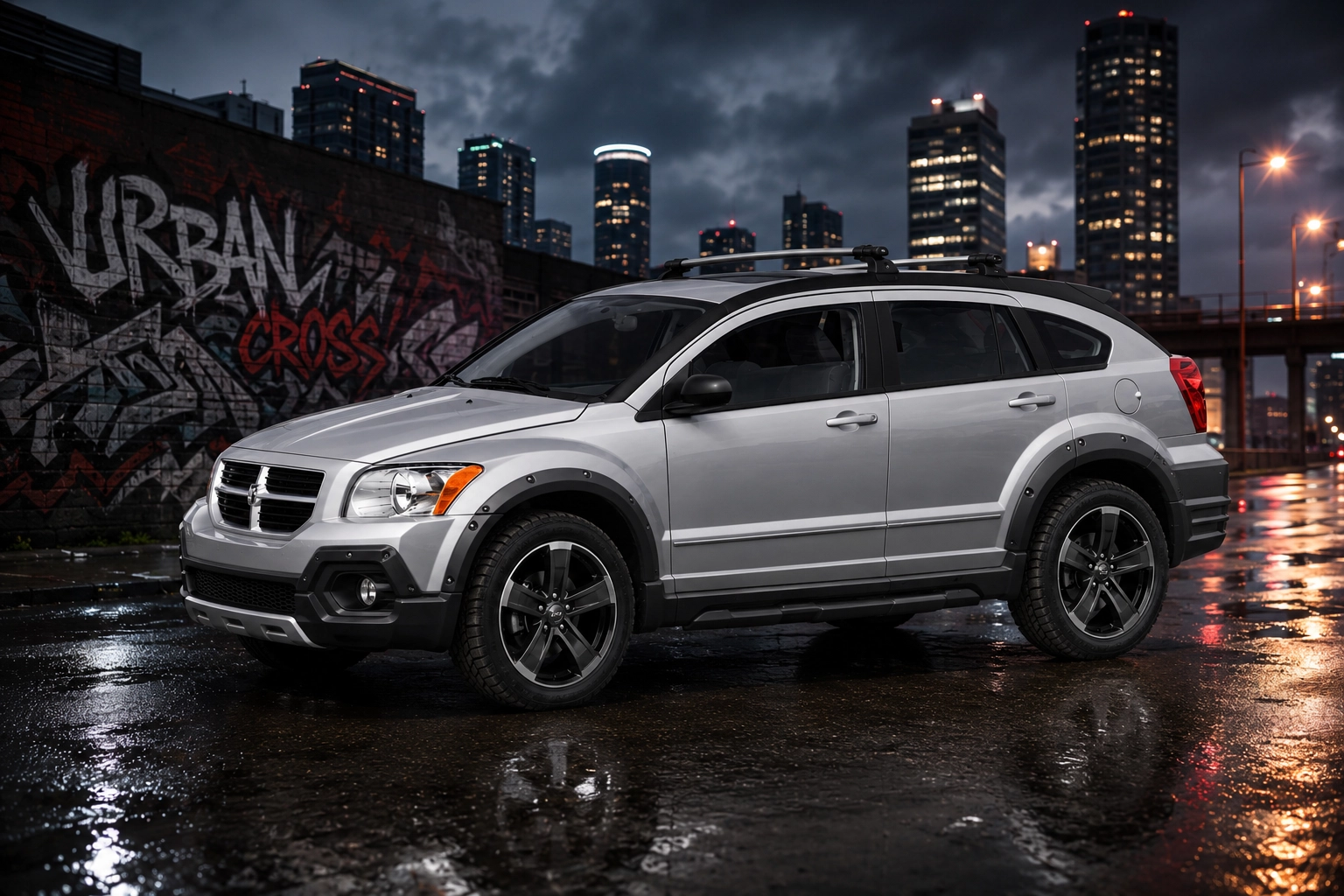
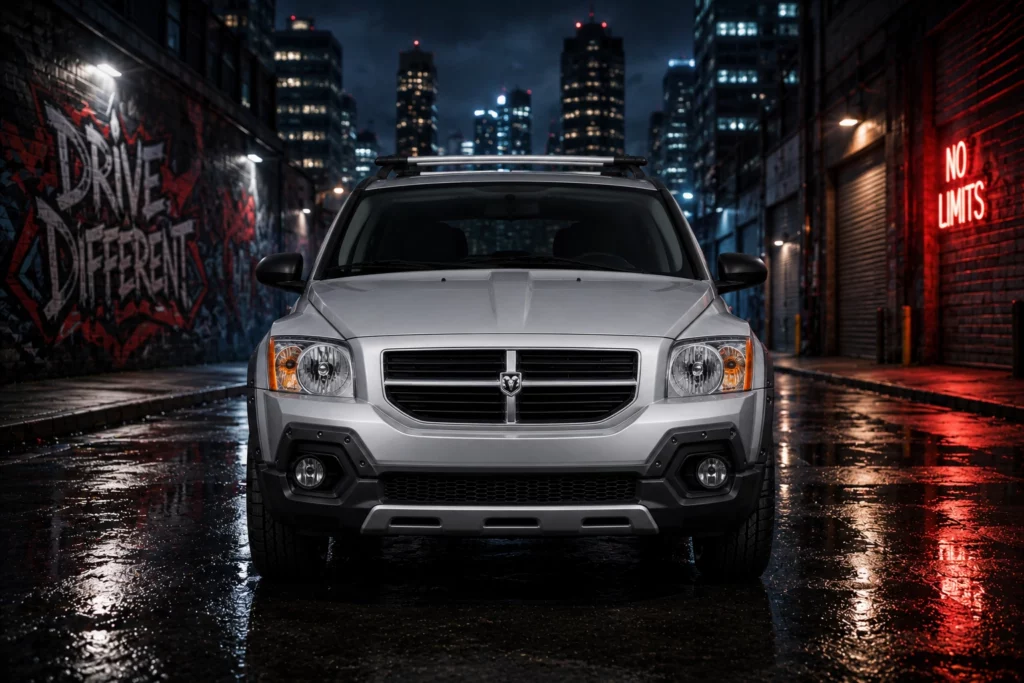
The Dodge Caliber is a distinctive five-door hatchback that combines the practicality of a family car with the raised styling of a compact crossover. Although production ended several years ago, many examples remain on South African roads, creating continued demand for reliable Dodge Caliber engines, gearboxes and replacement parts.
Finding the correct replacement engine requires more than searching for a general Dodge Caliber engine for sale. Depending on its model, production year and original market, a Caliber may use a 1.8-litre petrol, 2.0-litre petrol, 2.4-litre petrol, turbocharged 2.4-litre SRT4 or 2.0-litre CRD diesel engine. These engines are not automatically interchangeable.
This guide explains which engines were fitted to the Dodge Caliber, how to identify the correct unit, what compatibility details must be checked and what South African buyers should consider before purchasing an imported or second-hand replacement engine.
What is the Dodge Caliber and why are replacement engines still needed?
The Dodge Caliber is a compact five-door vehicle introduced during the mid-2000s as a replacement for the Dodge Neon in several markets. Its combination of a high roofline, hatchback loading space and bold crossover-inspired styling helped it stand out from conventional compact cars.
South African buyers received various Caliber derivatives, including petrol and diesel models. Many are now high-mileage vehicles, and their engine condition depends heavily on previous maintenance, cooling-system care, oil-change history and the quality of earlier repairs.
A replacement engine may be required after:
- Severe overheating and cylinder-head damage.
- Loss of oil pressure or internal bearing failure.
- A broken timing component or internal mechanical failure.
- Excessive oil consumption caused by internal engine wear.
- Turbocharger-related engine damage on diesel or SRT4 models.
- A failed rebuild that is no longer economical to repair again.
- Accident damage affecting the engine block, mounting points or ancillary components.
Which engines were fitted to the Dodge Caliber?
The Dodge Caliber was produced with several four-cylinder engine options. The petrol range included 1.8-litre, 2.0-litre and 2.4-litre World Engine variants with double overhead camshafts, four valves per cylinder and variable valve timing.
Other international versions included a 2.0 CRD turbodiesel and the high-performance 2.4-litre turbocharged engine used in the Dodge Caliber SRT4.
Table: Common Dodge Caliber engine options
| Caliber engine | Common engine code | Typical application | Compatibility warning |
|---|---|---|---|
| 1.8-litre petrol | EBA | Entry-level SE or SXT manual models | Normally paired with a manual transmission; do not assume compatibility with 2.0 CVT models |
| 2.0-litre petrol | ECN | Common SE and SXT petrol models | Check production year, wiring, ECU, intake system and transmission type |
| 2.4-litre petrol | ED3 | Higher-output R/T and selected international derivatives | May differ according to front-wheel-drive, all-wheel-drive and transmission configuration |
| 2.4-litre turbo petrol | ED4 | Dodge Caliber SRT4 | Specialised turbo engine; not a direct replacement for the naturally aspirated 2.4 |
| 2.0-litre CRD diesel | Market-specific diesel code | European and selected export-market diesel models | Requires exact matching of the diesel fuel system, turbo, wiring, ECU and gearbox |
Engine-code information can vary according to market and production specification. The code stamped on the existing engine, the VIN and the vehicle’s data plate should therefore be used to confirm the correct unit.
Which engine fits a Dodge Caliber 1.8?
A Dodge Caliber 1.8 generally requires the 1.8-litre four-cylinder petrol engine commonly identified by the EBA engine code. This engine was typically paired with a five-speed manual gearbox and should not be confused with the more common 2.0-litre petrol engine.
Even though the 1.8, 2.0 and 2.4 petrol engines form part of the same broader World Engine family, differences may exist in:
- Engine displacement and internal components.
- Engine-management programming.
- Intake and exhaust systems.
- Wiring harnesses and sensor arrangements.
- Flywheel, clutch and transmission configuration.
- Mounting brackets and ancillary components.
Installing a 2.0-litre engine in a vehicle originally fitted with the 1.8 may be technically possible as a conversion, but it should not be treated as a direct standard replacement. Additional parts, wiring changes, ECU work and registration considerations may be involved.
Which engine fits a Dodge Caliber 2.0 SXT?
The Dodge Caliber 2.0 SXT petrol generally uses the naturally aspirated 2.0-litre ECN four-cylinder engine. This is one of the most commonly searched Caliber replacement engines in South Africa.
Home of Engines lists a Dodge Caliber 1.8/2.0 SXT engine. However, the buyer must still confirm which displacement is being supplied and whether the unit matches the vehicle’s VIN, original engine code and gearbox.
Before ordering a 2.0 SXT engine, confirm:
- That the existing engine is the 2.0-litre petrol ECN and not the 2.0 CRD diesel.
- Whether the vehicle uses a manual gearbox or continuously variable transmission.
- The production year and whether any model-year changes affect sensors or wiring.
- Whether the replacement is a bare engine, long block or complete engine with accessories.
- Which components must be transferred from the original engine.
- Whether ECU programming, throttle relearning or immobiliser work will be required.
The 2.0 petrol engine and 2.0 CRD diesel share a similar displacement description but are completely different power units. Fuel type must always be confirmed before any purchase is made.
Which engine fits a Dodge Caliber 2.4 R/T?
The naturally aspirated Dodge Caliber 2.4 R/T generally uses the ED3 2.4-litre petrol engine. Some versions were produced with front-wheel drive, while selected markets also received all-wheel-drive derivatives.
A replacement 2.4 engine must be checked for compatibility with the vehicle’s drivetrain because differences can involve the sump, transmission arrangement, mounting hardware, accessories and control systems.
The naturally aspirated ED3 engine must also not be confused with the turbocharged ED4 used in the SRT4. Although both have a capacity of approximately 2.4 litres, the turbo engine has different internal components, compression requirements, intake and exhaust systems, engine management and cooling demands.
Does the Dodge Caliber SRT4 use the same 2.4 engine as the R/T?
No. The Dodge Caliber SRT4 uses a specialised turbocharged 2.4-litre engine commonly identified by the ED4 code. It should not be replaced with a standard naturally aspirated 2.4-litre ED3 engine without extensive conversion work.
The SRT4 installation includes performance-specific components such as:
- A turbocharger and intercooler system.
- Different intake and exhaust components.
- Turbo-specific engine internals and compression requirements.
- Different engine-management calibration.
- A high-capacity fuel-delivery system.
- A specialised manual transmission application.
- Additional cooling and lubrication requirements.
An SRT4 replacement engine should be sourced and installed by a workshop experienced with turbocharged Dodge or Chrysler performance vehicles. Substituting an incorrect long block or transferring damaged turbo components can result in immediate engine failure.
Which engine fits a Dodge Caliber 2.0 CRD?
The Dodge Caliber 2.0 CRD uses a turbodiesel engine rather than the ECN petrol engine. Depending on its production year and original market, this diesel unit may use market-specific engine identification codes and supporting components.
When sourcing a Caliber CRD engine, buyers should confirm:
- The complete code stamped on the original diesel engine.
- The engine’s power-output version and production year.
- The injector and high-pressure fuel-system specification.
- The turbocharger and exhaust-gas-recirculation configuration.
- Whether the vehicle has a diesel particulate filter.
- The wiring harness and diesel ECU part numbers.
- The manual gearbox, clutch and flywheel application.
A similar diesel engine from another vehicle may share the same basic block but use different manifolds, turbo components, sensors, sump arrangements or engine-management systems. The engine code and application must therefore be compared carefully.
What common problems can lead to Dodge Caliber engine replacement?
Not every Dodge Caliber fault requires a complete replacement engine. Misfires, poor acceleration, warning lights and starting problems can also be caused by sensors, ignition components, fuel-system faults, electronic-throttle problems or transmission issues.
A complete engine may be considered when testing confirms severe internal damage such as:
- Low or uneven compression across multiple cylinders.
- Serious cylinder-head or head-gasket damage after overheating.
- Internal bearing failure or crankshaft damage.
- A seized engine caused by oil starvation.
- Damaged pistons, cylinder walls or connecting rods.
- Major timing-system damage affecting valves and pistons.
- A cracked block or cylinder head.
- Repair costs that exceed the value of a suitable replacement engine.
What warning signs suggest that a Dodge Caliber engine is failing?
Warning signs of serious Dodge Caliber engine trouble include repeated overheating, heavy exhaust smoke, internal knocking, low oil pressure and contamination between the oil and cooling systems. The vehicle should be inspected before it is driven further.
Important warning signs include:
- Persistent overheating: This may indicate coolant loss, water-pump failure, thermostat problems, cooling-fan faults or internal engine damage.
- Blue exhaust smoke: Oil may be entering the combustion chambers through worn internal components, valve seals or a damaged turbocharger.
- Persistent white smoke: Once normal condensation has cleared, continued white smoke may indicate coolant entering the cylinders.
- Black smoke on a diesel: Possible causes include injector, turbo, airflow, boost-control or exhaust-system faults.
- Deep knocking or metallic noise: This can indicate bearing, crankshaft, piston or connecting-rod damage.
- Low oil-pressure warning: The engine should be switched off immediately to reduce the risk of further internal damage.
- Milky engine oil: Coolant may have mixed with the oil because of head-gasket, cylinder-head or block damage.
- Severe loss of power: Mechanical compression loss, fuel-system faults, turbo problems or electronic-control faults may be responsible.
- Metal particles in the oil: Internal components may be wearing or breaking apart.
A diagnostic scan is useful for identifying electronic fault codes, but it does not prove that the engine is mechanically healthy. Compression testing, cylinder-leakage testing, oil-pressure testing and cooling-system pressure testing may also be needed.
Could a Dodge Caliber CVT problem be mistaken for engine failure?
Yes. Some Dodge Caliber petrol models use a continuously variable transmission, commonly referred to as a CVT. Transmission slipping, delayed engagement, overheating or an inability to transfer power correctly can make the vehicle feel as though the engine is weak or failing.
Possible transmission-related symptoms include:
- The engine revving without a matching increase in road speed.
- Delayed engagement when Drive or Reverse is selected.
- Transmission-temperature warnings.
- Shuddering or unusual droning noises under acceleration.
- Reduced-power or transmission-protection mode.
- Fault codes relating to transmission speed, pressure or ratio control.
The engine and transmission should therefore be diagnosed together before a replacement engine is ordered. Installing another engine will not solve a damaged CVT or incorrect transmission-control issue.
How do you identify the correct Dodge Caliber engine code?
The most reliable identification process combines the VIN, engine number, physical engine markings and vehicle specification. Ordering only according to the words “Dodge Caliber” creates a high risk of receiving the wrong engine.
Use the following process:
- Record the complete 17-character VIN from the vehicle or registration documents.
- Find and photograph the code or number stamped on the original engine.
- Check the vehicle data plate for its production date and specification codes.
- Confirm whether the vehicle is petrol or diesel.
- Confirm whether the engine is 1.8, 2.0 or 2.4 litres.
- Confirm whether the 2.4 is naturally aspirated or turbocharged.
- State whether the vehicle has a manual gearbox, conventional automatic or CVT.
- Send clear photographs of the engine, intake, wiring plugs and mounting areas to the supplier.
Codes such as EBA for the 1.8 petrol, ECN for the 2.0 petrol, ED3 for the naturally aspirated 2.4 and ED4 for the turbocharged 2.4 may be encountered. The full vehicle information should still be checked because specifications can differ between markets.
What compatibility details must be checked before purchasing?
A matching engine code is the starting point, but the installer must also compare the external components and control systems. Two engines with similar blocks may not arrive with the same accessories or vehicle-specific parts.
Compatibility checks should include:
- Engine block and cylinder-head specification.
- Intake manifold and electronic throttle body.
- Exhaust manifold, catalytic converter and oxygen sensors.
- Camshaft and crankshaft position sensors.
- Engine wiring harness and electrical connectors.
- ECU, security system and immobiliser compatibility.
- Engine mounts and mounting brackets.
- Sump shape and oil-pickup arrangement.
- Flywheel, flexplate, clutch or torque-converter connection.
- Manual, CVT or other transmission application.
- Alternator, air-conditioning compressor and power-steering components.
- Turbocharger, injectors and diesel equipment where applicable.
If the imported engine is supplied as a compatible long block, some external parts may need to be transferred from the original engine. These transfers should be agreed upon before the installation quotation is approved.
Should you buy a complete engine or a bare long block?
A complete Dodge Caliber engine can simplify installation because more of the intake, ignition, fuel and accessory components may already be fitted. However, suppliers do not always use the phrase “complete engine” in the same way.
Ask whether the quoted engine includes:
- Intake and exhaust manifolds.
- Electronic throttle body.
- Fuel rail and injectors.
- Ignition coils.
- Starter motor and alternator.
- Air-conditioning compressor.
- Engine wiring harness.
- Flywheel or flexplate.
- Turbocharger and diesel fuel equipment where applicable.
- ECU and other control modules.
Ancillary parts attached to a used engine may be included to assist installation but may not carry the same warranty as the internal engine assembly. The written warranty should state exactly what is covered.
What should you inspect when buying a used Dodge Caliber engine?
A used engine should be inspected for physical damage, missing components, contamination and evidence of overheating before installation begins. The buyer should also confirm how the engine was tested and what documentation is supplied.
Practical inspection checklist:
- Verify that the engine code matches the quotation and invoice.
- Inspect the block and cylinder head for cracks or impact damage.
- Check the engine mounts and threaded mounting points.
- Look for signs of oil and coolant mixing.
- Inspect the oil filler area for excessive sludge.
- Check wiring connectors, sensors and plastic fittings for damage.
- Confirm that the crankshaft can rotate where inspection procedures allow.
- Ask whether compression, oil pressure or running condition was tested.
- Confirm any available mileage or donor-vehicle information.
- Request the written warranty and installation requirements.
Should you repair, rebuild or replace the original engine?
The correct option depends on the type of failure, condition of the original block and head, availability of internal parts, workshop capability and the total cost of each route.
| Option | When it may make sense | Main consideration |
|---|---|---|
| Repair the existing engine | The fault involves external gaskets, sensors, cooling components or other limited damage | Mechanical tests should confirm that the internal engine remains healthy |
| Rebuild the existing engine | The block and cylinder head can be machined and the correct internal parts are available | Quality depends on machining accuracy, parts and workshop experience |
| Install a local used engine | A correctly coded and tested unit is available at a suitable price | Previous mileage, overheating and maintenance may be difficult to verify |
| Install an imported used engine | A matching unit is available with documentation and warranty | All compatibility and included-component details must be checked |
| Install a remanufactured engine | The vehicle justifies a higher-cost, comprehensively restored engine | Availability for older Caliber variants may be limited |
Do not decide based only on the purchase price of the engine. Installation labour, fluids, service parts, cooling-system repairs, coding and transmission work can materially change the final cost.
What parts should be replaced during the engine installation?
Replacing accessible maintenance items while the engine is out can prevent repeat labour and help protect the replacement unit. Parts should be chosen according to the exact engine and manufacturer specification.
The workshop should assess:
- Engine oil and oil filter.
- Coolant and cooling-system condition.
- Thermostat, water pump, radiator and cooling fans.
- Drive belts, pulleys and tensioners.
- Accessible crankshaft, camshaft and cover seals.
- Spark plugs and ignition components on petrol engines.
- Injector seals, fuel filters and turbo oil lines on diesel engines.
- Engine and gearbox mounts.
- Clutch and flywheel components on manual vehicles.
- CVT condition, fluid requirements and cooling system on applicable models.
The replacement engine should be installed using the correct oil, coolant and torque specifications. Before the vehicle is returned to normal use, the workshop should check oil pressure, coolant circulation, operating temperature, fault codes and fluid leaks.
What warranty should you expect on a replacement Dodge Caliber engine?
A written warranty provides more protection than buying an untested engine from a private seller, but buyers must understand the conditions. Home of Engines offers warranty coverage on qualifying imported engines and gearboxes, subject to the applicable terms and installation requirements.
Before accepting the engine, ask:
- When the warranty period begins.
- Which internal engine components are covered.
- Whether accessories and ancillary parts are excluded.
- Whether professional installation is mandatory.
- Which service items must be replaced during installation.
- Whether proof of installation and purchase receipts are required.
- Whether overheating, oil starvation or incorrect fitment invalidates the warranty.
- Who is responsible for removal, refitting, labour and transport during a claim.
The complete terms should be read before the original engine is removed or the replacement unit is opened, modified or installed.
Can a Dodge Caliber engine be delivered anywhere in South Africa?
Yes. Nationwide engine delivery allows private owners and workshops outside major Gauteng centres to source a suitable replacement unit. Home of Engines can assist customers in multiple provinces, subject to current delivery terms, costs and service availability.
This can assist buyers in areas such as:
- Johannesburg, Pretoria, Centurion and the wider Gauteng region.
- Durban, Ballito, Pietermaritzburg and other parts of KwaZulu-Natal.
- Cape Town and the wider Western Cape.
- Mbombela, Secunda and other Mpumalanga locations.
- Polokwane and other Limpopo towns.
- Bloemfontein and the Free State.
- Gqeberha, East London and other Eastern Cape areas.
Delivery charges, unloading arrangements and estimated delivery periods should be confirmed before payment. The workshop should also have the correct equipment available to receive and safely move the engine.
Where can you find a Dodge Caliber engine for sale in South Africa?
Home of Engines supplies imported used engines, gearboxes and related automotive components in South Africa. Available stock changes regularly, so buyers should contact the team with the exact Caliber engine details rather than assuming that every listed unit will fit every model.
Helpful pages include:
- Dodge Caliber 1.8/2.0 SXT engine
- Replacement engines for sale
- Imported engines for sale in Johannesburg
- Engine and gearbox services
- Warranty, collection and delivery terms
- Contact Home of Engines
When requesting a quote, send the VIN, engine code, production year, fuel type, engine capacity, transmission type and clear photographs of the original engine. This gives the supplier the best chance of identifying the correct replacement.
Frequently asked questions about Dodge Caliber engines
What engine does a Dodge Caliber use?
The Dodge Caliber was produced with several engines, including 1.8, 2.0 and 2.4-litre petrol units, a turbocharged 2.4-litre SRT4 engine and a 2.0-litre CRD turbodiesel. The VIN and engine code must be checked to identify the correct version.
Are the Dodge Caliber 1.8 and 2.0 engines the same?
No. They belong to the same broader engine family but have different displacement, internal specifications and control requirements. The 1.8 was commonly paired with a manual gearbox, while many 2.0 models use a CVT.
Can a 2.4 engine replace a 2.0 Dodge Caliber engine?
It should not be treated as a direct replacement. A conversion may require changes to the ECU, wiring, intake, exhaust, transmission, mounts and vehicle documentation. Installing the correct original engine type is normally simpler and less risky.
Is the Dodge Caliber 2.0 petrol engine the same as the 2.0 CRD?
No. The 2.0 petrol and 2.0 CRD are completely different engines. One uses petrol ignition and the other is a turbocharged diesel with a different fuel system, wiring, ECU, turbo and transmission application.
Does the Dodge Caliber SRT4 use a normal 2.4 engine?
No. The SRT4 uses a specialised turbocharged 2.4-litre engine commonly identified by the ED4 code. It is not interchangeable with the naturally aspirated ED3 2.4 engine without substantial modification.
How do I know whether my Dodge Caliber engine or gearbox has failed?
The vehicle should receive a diagnostic scan and mechanical testing. An engine may require compression, leakage, oil-pressure and cooling-system tests, while a CVT or manual gearbox requires separate transmission diagnosis.
Can Home of Engines deliver a Dodge Caliber engine outside Gauteng?
Yes. Home of Engines can arrange delivery to customers outside Gauteng, subject to its current shipping terms, delivery charges and service availability.
Final advice before buying a Dodge Caliber replacement engine
The safest replacement is normally an engine that matches the original unit’s capacity, fuel type, engine code and transmission application. Ordering according to the vehicle name alone can result in an incompatible petrol, diesel, naturally aspirated or turbocharged engine being supplied.
Before paying, confirm the VIN, engine code, model year and gearbox type. Ask what components are included, whether the engine was tested, what must be transferred from the original unit and which installation conditions apply to the warranty.
For help finding a Dodge Caliber engine for sale in South Africa, contact Home of Engines with your vehicle details. The team can check available stock, assist with compatibility and discuss collection or nationwide delivery.